
WHAT TO ORDER AT TEN TEN
If you have been around long enough or dug through the archive of all my posts, one thing may be clear to you: I have a relentless personal quest to find good pho in this foreign land.
This is always a difficult task due to the over-saturation of offerings from dozens of restaurants in the city. On the other hand, it is incredibly easy and lazy to gloss over all of these and declare that NYC offers nothing but garbage and overpriced pho. This has been well communicated to me through Reddit comments hailing the superiority of Philadelphia, San Francisco, Houston, or Dallas. Going by this logic, I would also recommend you try a few other cities instead, such as Hanoi, Nam Dinh, or Ho Chi Minh City.
Needless to say, every Viet has his or her own standards and requirements when it comes to a bowl of pho that is worthy of the word “authentic.” Understanding the market and being one of the Viets, my standards lie in two things (the rest can be overlooked for now cuz they can be easily fixed): the broth and the noodles.
Standard 1: Pho (or for you pedantic folks, “phở”) is actually the name of the noodles. They shall be flat, wide-cut, and most importantly, fresh. I don’t give a fuck if you deem it okay to use dry-package pho noodles. If you’re gonna charge me $20 or more for a bowl of pho, I will not entertain such an idea.
Standard 2: In my personal opinion, the broth is the most important ingredient of pho. This is the most difficult part to get right and is unquestionably the sole deciding factor for a Vietnamese family to go out and pay their hard-earned money at a pho joint on a Saturday morning instead of laboring for five hours to home-cook it themselves. There’s a very delicate balance that a pho joint has to hit (yes, it is a cliché term, but it is that delicate). The broth needs to hit the right note of sweet and salty while maintaining its visually clear body. It is not simply like a bowl of bone soup (broth) where you can just pile up more and more ingredients and expect it to get better. Do you know what happens when you pile more bones, heat, and time into a pho broth? It turns into tonkotsu. Yet these joints still have to simmer for hours on end without reaching a point of no return.
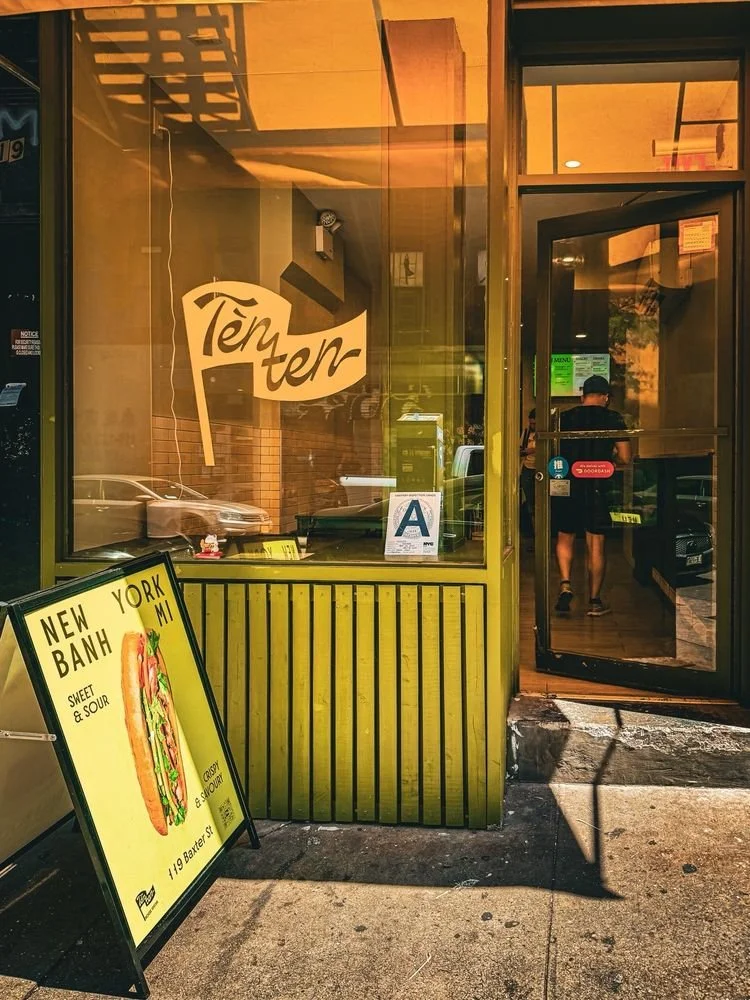
image from Yelp
Ok I will stop there before nerding out about other details such as spices, herbs, usage of chicken fat, and choices of meat (from picking the cut, slicing the cut, and cooking the cut). I will have another dedicated post for it.
Ten Ten stood out for me to get the standard number 1 right. Standard 2 still requires work to beat the top offering in NYC at the moment. But the joint gained a lot of respect from me due to its presentation. So before diving into that, let’s get the recommendations down:
Pho Tai Gau: This is how you call out an order for a bowl of pho. Pho (pho) - Tai (how you want the meat to be done - medium) - Gau (what cut of the meat you want - brisket cut). In any joint in Vietnam, you would just yell “Give one medium brisket” and they will understand. Pho joints are typically breakfast joints; things move at a brisk pace, and people go in and out very quickly before work hours. You can see here for an example in Hanoi: image
Pho Loi Gau: Same concept here, but you call for two cuts of meat instead of one. Here you call for Loi (a more muscular cut) and brisket.
Pho Ap Chao: This is an exception. Ap Chao means sautéing, which means you want your beef (regardless of the cut at this point) to be sautéed in a pan (wok) with fat and garlic instead of a traditional hot dip in boiling water (or light broth). This bowl gains a lot of popularity, but it does overwhelm any subtleness of the broth since all you can taste is that sautéed garlic beef. Very indulgent choice.
Banh Mi Hanoian: As basic and fundamental as a Banh Mi gets. Very generous portion. But I guess for $13, it better be.
Banh Mi Early Bird: A nostalgic offering where pork is swapped out for an omelet. Very odd offering unless you’ve been there.
Banh Mi Sot Vang: Plain banh mi with beef stew. Dipping side. This dish is a result of French colonization. It is a good offering.
Coffee the OG: good coffee.
Coffee Salt-Mate: coffee with salt. Very creamy and slightly salty. Try it, you will not regret it.
Coco-Nuts for you: coffee with coconut cream and condensed milk.
very small menu befits a very small space (4 tables). This humble-looking joint offers way more than meets the eye. A joint that focuses on one or two types of dishes is a rare breed for NYC Vietnamese eateries. This commitment goes further with choices of complementary condiments (vinegar, cut chili peppers, and limes), quay (pho donuts).
In short, it is a no-fuss, no-extra, no-nonsense Vietnamese joint that I could see being insanely popular outside a typical Hanoi high school or a government office.
Go try it while everything is still young.